Digital Marketing Strategy Guide
overview
Digital marketing helps businesses to attract customers, generate enquiries and support sales through channels such as search, social media, paid advertising and email. Its effectiveness depends on how well those channels connect with what customers need and what the business wants to achieve.
For a visitor attraction, that might mean filling quieter sessions or increasing advance bookings. For a manufacturer, it could mean reaching a new sector, helping buyers to understand a technical advantage or generating better qualified enquiries.
At Oyster, we bring strategy, creative content and campaign management together around those objectives. We look at the journey from the first advertisement or search ad through to the website, enquiry or booking, so decisions are made with the wider business in mind rather than based on an isolated campaign report.

Why Digital Marketing Matters
Building an effective digital marketing strategy
A digital marketing strategy aims to connect commercial objectives with audience understanding, messaging, channel selection and measurement. Done properly, each decision supports the next.
Start With the Business Objective
The objective needs to be specific enough to guide decisions. Increasing bookings for an underused weekday session requires a different approach from selling out a seasonal event. Generating enquiries from a new manufacturing sector requires different content from encouraging existing customers to buy again.
Priorities should take account of margins, capacity, sales cycles and available budget. These help define which customers and actions are most valuable as well as the cost the business can justify to acquire them.
Understand How Customers Decide
Useful audience insights come from customer conversations, sales-team feedback, search behaviour and existing tracking data. Together, these can reveal what prompts a purchase, which questions need answering and where people hesitate. Personas can then help organise that understanding by reflecting the evidence in an easy-to-understand format.
A parent booking a family day out may need reassurance about age suitability, travel time and overall cost. An engineer assessing a component may need technical detail, while procurement colleagues need confidence in supply and support. The content should address those different decisions.
Make the Proposition Clear
The message needs to explain why the offer is relevant to the reader and give people a reason to take the next step, with design, copy, photography and video all contributing towards that understanding.
For leisure campaigns, showing the experience helps customers picture their visit, whereas for a complex product or service, an animation, application example or clearly explained case study can make it far easier for potential customers to assess. Creative work should always carry the message consistently from the advertisement to the landing page.
Select Channels With a Clear Role
Channel selection should follow on from the audience and objectives. Your plan needs to explain what each channel contributes, how it connects with other activity and how its performance will be assessed. Budgeting for each channel should also cover the creative, any website improvements and the measurement needed to support delivery and inform future strategy.

Connecting the channels
Search and discovery!
Search engine optimisation and paid search help businesses become visible when people are looking for relevant products, services or answers. Useful website content addresses the questions customers ask, using language they understand and evidence they can assess.
A local attraction might need clear information about its activities, location and booking process, where a technical business might need application pages, specifications and examples of its products in use. This gives discovery a practical purpose: helping the right visitor find enough information to move forward.
Paid Advertising
Paid search and paid social support different stages of the buying journey. Search campaigns respond to expressed demand, while social advertising can introduce an experience or solution to people who have not yet searched for it.
Performance ultimately depends on the offer, creative, campaign setup and the quality of the destination page because audience settings alone do not determine success. Campaigns need sufficient budget and time to generate useful evidence, followed by considered changes based on what that evidence shows.
Content and Social Media Marketing
Digital marketing that leverages content to gain attention helps customers understand your offer and judge the organisation behind it. Depending on your audience, that content should include practical articles, product demonstrations, customer stories, short videos or answers to common questions.
Your content plan should give each piece a purpose. Some content builds familiarity, some helps people compare options and some supports a direct enquiry or booking. The format and level of detail should suit both the decision and the channel.
Email and Customer Retention
Email supports enquiries over time, introduces relevant offers and encourages repeat business among people who have agreed to hear from your organisation. Its role should reflect your relationship with the recipient and only offer what is useful to them.
For a leisure business, that could include a timely reminder about a seasonal event or discount. For a manufacturer, it might be an application insight or product update relevant to that customer’s sector. Audience relevance, frequency and follow-up should all form part of the plan.
Website and Conversion
The website needs to fulfil the expectation created by the campaign. Visitors should be able to find the relevant information, assess the offer and complete the next step without unnecessary difficulty.
At Oyster we always consider the clarity of the landing page, mobile usability and the enquiry or booking process because improving these helps businesses make better use of the traffic they already attracts. Any proposed change should address an observed problem and be assessed against a meaningful outcome.

Measuring commercial performance
Measurement begins with the outcomes that matter to the business.
For a visitor attraction, those outcomes might include completed bookings, booking value and the performance of quieter sessions. For a B2B organisation, they might include qualified enquiries, sales opportunities and the revenue those opportunities eventually generate.
Cost per acquisition, conversion rate and return on ad spend all help assess campaign efficiency. Whereas reach, engagement and click-through rates help explain how people respond, but they need to be interpreted alongside the quality and value of the resulting actions.
Return on ad spend, or ROAS, compares earned revenue with advertising spend. A campaign that generates £40,000 in revenue with a £10,000 media spend has a ROAS of 4:1. That describes the revenue relative to the advertising cost, which is distinct from profitability that depends on margin, delivery cost and the wider cost of marketing.
Tracking provides evidence rather than a complete record of every influence on a sale. We consider campaign reporting alongside website analytics and available booking or sales data. Where platforms credit the same purchase, their reported revenue should not simply be added together.
Performance also needs context. Seasonality, changes in demand and customer buying cycles affect results. The aim is to understand what is changing, identify the likely reasons and make timely and proportionate decisions about budget, creative and the customer journey in order to best maximise the results.



Digital marketing in practice
Flip Out Watford
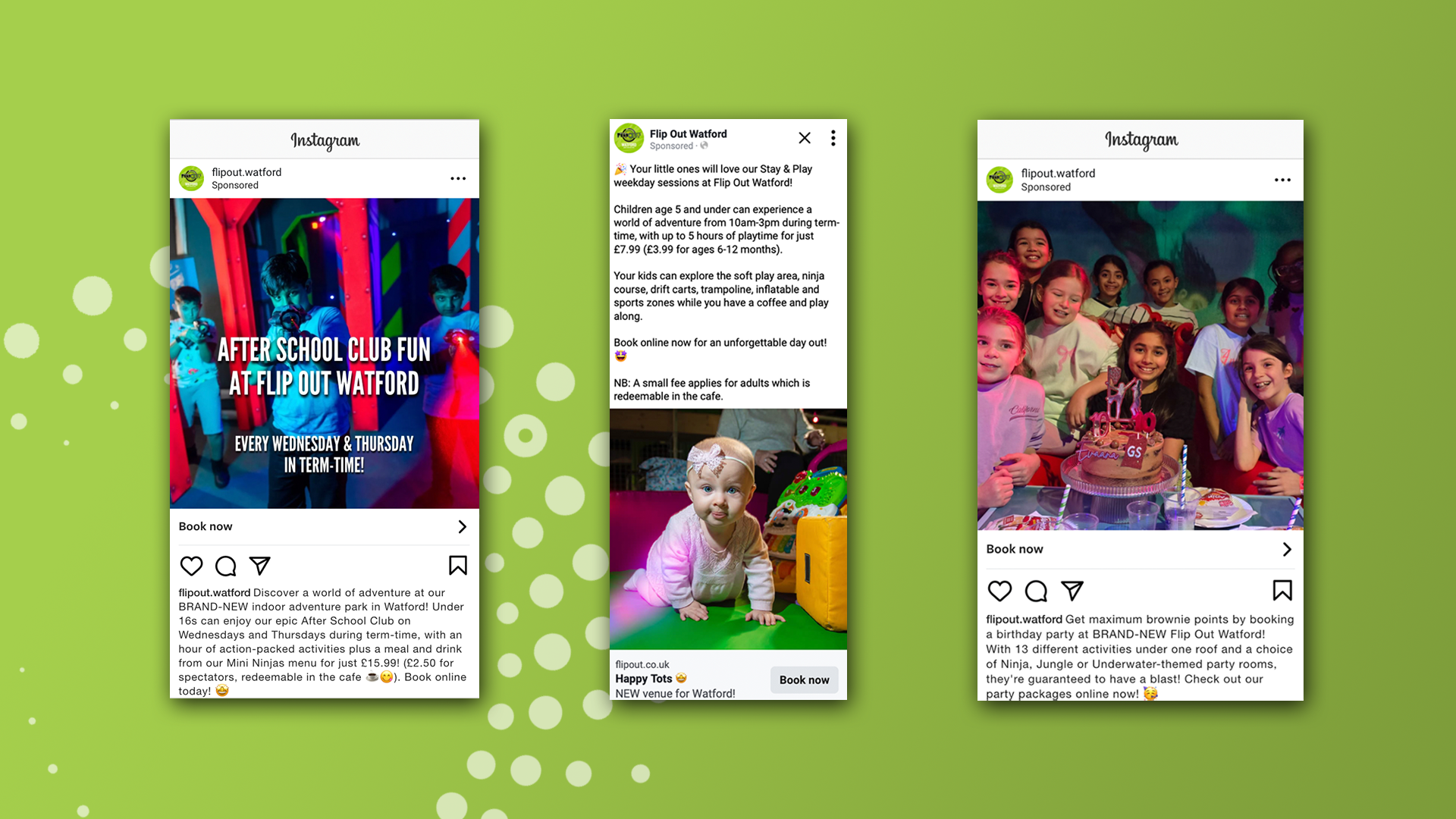
For the launch of Flip Out Watford, Oyster established end-to-end tracking and developed Google and Meta campaigns around completed bookings. The activity connected specific offers, including birthday parties and after-school sessions, with relevant audiences and creative.
In the first month, the campaign recorded £12,540 in bookings from £880 in media spend, approximately 14.3:1 ROAS. The result demonstrates how a clear objective can guide campaign setup, creative and measurement from the outset.
Read the Flip Out Watford case study
Manor Farm Park & Woodlands
Manor Farm needed to promote its year-round attractions alongside extra seasonal events. Oyster combined paid media and refreshed creative with tracking, website and search improvements, supporting both peak events and quieter periods.
During the first three months, the campaigns recorded £99,821 in tracked purchases from £8,542 in advertising spend, approximately 11.7:1 ROAS, illustrating the value of considering the campaign and the website together.
Read the Manor Farm case study
Go Ape
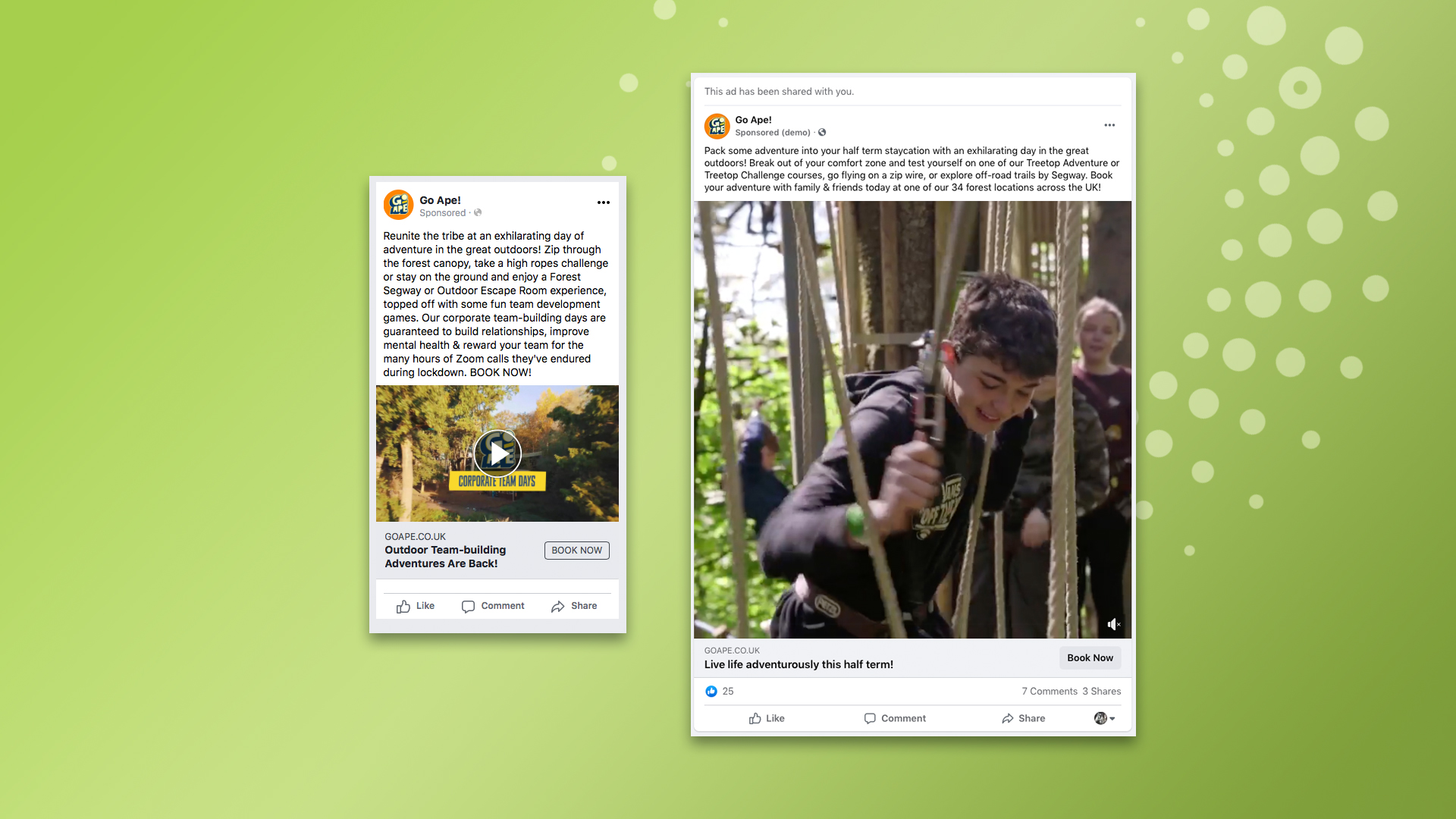
Our work with Go Ape included reviewing and rebuilding the structure of its paid social campaigns. Numerous local campaigns were taking too long to move through the learning phase. Bringing sites into regional campaign groups helped address that problem, while Google search campaigns were restructured around individual locations and relevant landing pages.
The lesson was specific to the channel and the evidence available. Different platforms needed different approaches to support the same commercial objective.
These examples describe individual engagements and reporting periods but it’s important to bear in mind that results vary with the market, offer, budget and attribution method.


Frequently asked questions
What Does a Digital Marketing Strategy Include?
A digital marketing strategy sets out who a business needs to reach, what it wants those audiences to do and how online activity will support that objective. It brings together audience insight, messaging, channels, budget and measurement into a practical plan.
The strategy starts with the commercial priority. That might be growing revenue in a particular sector, improving lead quality or increasing bookings for a specific offer. It should explain what progress should look like and how it will be measured.
Audience research then informs the approach. Customer interviews, sales conversations, search enquiries and existing performance data can reveal motivations, objections and information needs. These findings help shape buyer personas and messaging, including the different needs of people involved in shared buying decisions.
The plan should define the role of each channel, the content and creative required, the destination pages and the follow-up process. It also needs clear responsibilities, an achievable schedule and a budget that includes delivery and supporting work.
Finally, it should explain how findings will influence decisions. A strategy becomes useful when the team knows what it is testing, what evidence it needs and how it will decide whether to continue, change or expand activity.
How Long Does Digital Marketing Take to Produce Results?
Paid campaigns can begin generating traffic and enquiries soon after launch. Establishing reliable performance takes longer and depends on demand, budget, conversion volume and the quality of the offer and website.
Early activity provides evidence about how people respond. It may reveal that a message attracts interest but the landing page fails to answer an important question, or that one offer generates more valuable customers than another. Campaign learning and considered testing are part of this process.
Three to six months can be a useful planning window for a programme of improvement, but expectations should be set for the specific work. Search and content changes may take longer to gain visibility. A B2B campaign can generate a relevant enquiry quickly while the resulting sale takes several months. The reporting schedule should also distinguish early indicators from business outcomes. Clicks and initial enquiries can show whether the campaign is reaching people, whereas qualified opportunities, completed bookings and repeat purchases provide stronger evidence of commercial progress.
A sensible plan therefore sets milestones rather than promising a single date when digital marketing will begin to work. It also allows for seasonality and avoids treating a short period of weak or unusually strong results as a reliable long-term pattern.
What is ROAS and What Counts as a Good Result?
ROAS (Return On Ad Spend) is calculated by dividing revenue attributed to advertising by the media spend. If £1,000 in advertising spend produces £4,000 in attributed revenue, the ROAS is 4:1.
Return on investment, or ROI, considers profit in relation to the whole cost and ROAS focuses specifically on attributed revenue relative to media spend.
A useful target depends on the economics of the business. Product margin, fulfilment costs, agency fees and repeat purchasing all affect the return needed to support profitable growth. A campaign can report a high ROAS while making little profit if the underlying margin is low.
For example, if £4,000 in attributed revenue contributes only 20% after variable costs, it effectively only £800 before marketing costs. Spending £1,000 on advertising would exceed that contribution despite a 4:1 ROAS. Longer-term customer value may change the assessment but it needs evidence.
ROAS also depends on how that revenue is attributed. Retargeting people who already know the business can produce very different returns to those achieved from introducing the brand to new audiences. Comparisons should use consistent reporting periods and attribution settings, with care where several platforms claim credit for a purchase.
For businesses with longer sales cycles, qualified lead cost and the value of resulting opportunities may be more useful early measures. ROAS is one part of the assessment, alongside profitability, acquisition quality and the wider commercial objective.
How Does Digital Marketing Differ Between Sectors?
Digital marketing should reflect how customers research, choose and buy within a particular market. The buying cycle, value of the purchase and number of people involved all influence the approach.
For leisure and visitor attractions, priorities may include local awareness, advance bookings, seasonal events and filling quieter periods. Creative needs to communicate the experience, while the website needs to also answer practical questions about suitability, availability and cost.
For manufacturing and technical businesses, customers may need more detailed information before making contact. Application content, specifications and case studies can help demonstrate suitability. Messaging may need to address engineers, procurement teams and senior decision-makers, each with different concerns.
Retail and e-commerce businesses may place greater emphasis on product discovery, purchase conversion and repeat orders. A service business might focus on the quality of enquiries and the proportion that become customers.
These differences should influence reporting too. Booking revenue may be visible relatively quickly, while the value of a technical enquiry may only become clear after qualification and sales follow-up. The strategy needs to accommodate that distinction from the outset.
How Do You Improve Digital Marketing Conversion Rates?
Start by identifying where people fail to complete the intended action and what might be causing that difficulty. Website analytics, customer feedback and a review of the journey can help distinguish a traffic-quality problem from a problem with the page or process.
Check whether the landing page matches the advertisement or search that brought the visitor there. It should make the offer clear, answer the questions needed for a decision and provide an obvious next step. Relevant reviews, case studies and practical information can help visitors assess whether the offer suits them.
Then examine the process itself, particularly on mobile. Forms, account requirements, unexpected costs and awkward booking steps can introduce friction. Tracking should also be checked so a reporting fault is not mistaken for a fall in actual sales.
Prioritise changes according to the evidence, likely impact and effort required. Where traffic and conversion volumes permit, controlled tests can help compare alternatives. On lower-volume sites, usability reviews and customer feedback may provide more useful direction than inconclusive A/B tests.
Measure the quality of the outcome as well as the rate. A shorter form may generate more enquiries but provide less information for qualification. The improvement should help the business gain valuable customers, rather than simply increase a percentage in a report.
Which Digital Channels are Best for Different Audiences?
The best channel depends on where the audience pays attention, what they need to understand and how close they are to making a decision. Each channel should have a defined role, supported by suitable content and a realistic budget.
Search can help reach people already looking for a product, service or answer. Relevant landing pages are essential, particularly where the enquiry is specific to an application, location or type of experience.
LinkedIn may be useful when professional role, industry or organisation is relevant to audience selection. Case studies, technical explanations and informed commentary can support B2B consideration, although performance still needs to be judged against the value and quality of the response.
Facebook and Instagram offer opportunities to introduce experiences and products through visual, eye-catching creative, including locally relevant leisure campaigns. Their suitability depends on the audience, offer and campaign evidence rather than assumptions about age alone.
YouTube can support demonstrations and explanations as well as awareness, while TikTok may suit brands with a credible approach to short-form video. Both require content that works in the setting where people encounter it.
Email helps maintain a relationship with customers and prospects who have agreed to receive communications. It is particularly useful to consider where buying decisions take time or repeat purchases matter.
A practical starting point is a focused combination that the business can fund and support properly. Further channels can be considered when they have a clear role and the team has the capacity to produce suitable content and evaluate their contribution.
How Oyster can help
Oyster’s digital marketing experience brings together strategic planning, paid search and social campaigns, content creation, creative development and performance analysis. We also consider the whole website experience that supports those campaigns.
An initial conversation with you helps us to establish your commercial priorities, what is already working and where there may be gaps. From there, we agree the scope of support, responsibilities and measures of success, whether that involves improving an existing campaign or developing a more coordinated programme.
If your campaigns are generating activity without enough business, or you are unsure where to invest next, talk to us. We can help you examine the audience, message, campaign performance and customer journey to identify where improvements will have the greatest impact.
Use the form below or call +44 (0)1582 761212 and let’s discuss your priorities.
Contact us
Message
We’d love to speak to you.